Modern Hair Transplant in Islamabad: The Complete Guide
Hair loss can affect confidence, appearance, and everyday social interactions. For people experiencing noticeable thinning or receding hairlines, transplantation can offer a long-term way to restore density using the patient’s own follicles. Modern techniques focus on natural growth patterns, careful extraction, and individualized planning rather than simply adding hair to empty areas. Understanding the procedure, candidacy, recovery, risks, and expected results can help patients make an informed decision.
Understanding Hair Transplantation
A hair transplant is a surgical procedure in which healthy follicles are moved from a donor region, usually the back or sides of the scalp, to areas affected by thinning or baldness. Because the follicles generally come from a genetically stronger region, transplanted hairs can continue growing for many years. The procedure is designed to create a natural-looking distribution that suits the patient’s facial features and existing hair pattern. Individualized planning should always come before treatment rather than relying on a standard graft package.
People considering Hair Transplant in Islamabad should first understand that transplantation is not a quick cosmetic fix. A qualified surgeon evaluates the cause of hair loss, donor supply, scalp condition, age, medical history, and future progression. This assessment helps determine whether surgery is appropriate and which technique can provide a balanced result.
Why Choose a Professional Clinic
Choosing the right clinic is one of the most important parts of the process. Patients should look for a facility where a qualified hair restoration surgeon performs or directly supervises the procedure. Proper sterilization, trained staff, modern equipment, and clear communication are essential for patient safety.
A reputable provider should explain realistic outcomes instead of promising perfect density. For anyone comparing Hair Transplant in Islamabad clinics, transparent consultation is more valuable than aggressive sales promises. During consultation, patients can ask about the surgeon’s experience, proposed technique, estimated graft requirement, recovery instructions, possible complications, and follow-up schedule. Reviewing genuine before-and-after cases may also help patients understand what results are realistically achievable.
Common Hair Transplant Techniques
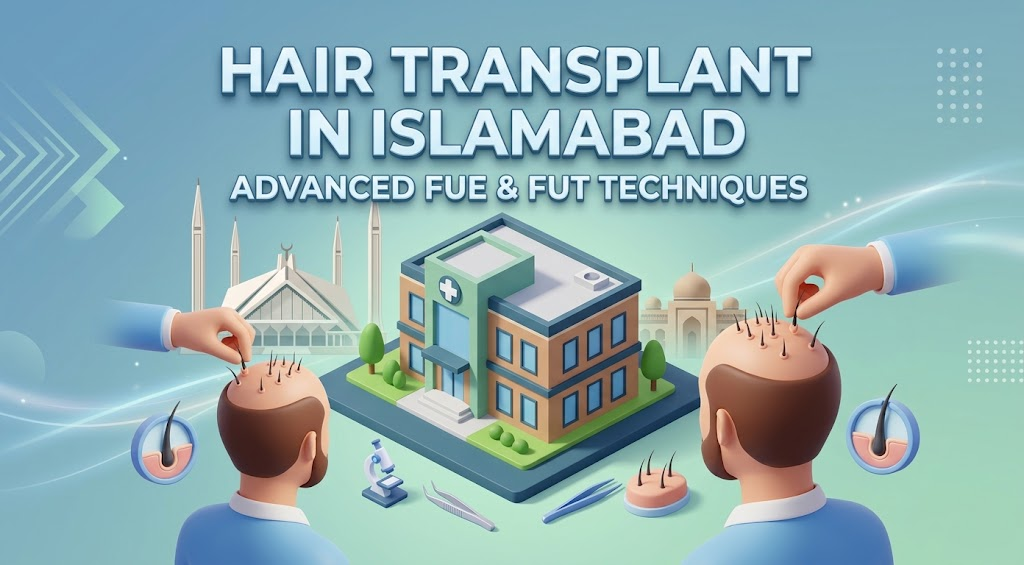
Follicular Unit Extraction, commonly called FUE, involves removing individual follicular units from the donor area before placing them into prepared recipient sites. Because it does not require a long linear incision, it usually leaves tiny extraction marks that become less noticeable as they heal. FUE is widely used when patients want a less invasive harvesting approach.
Follicular Unit Transplantation, or FUT, removes a narrow strip of scalp containing follicles, which is then divided into individual grafts. The donor area is closed with sutures, leaving a linear scar. FUT can still be useful for selected patients, particularly when a surgeon believes it can provide an appropriate number of grafts while preserving the donor supply.
Is Hair Transplantation Right for You?
Good candidates generally have sufficient healthy donor hair and a stable pattern of hair loss. Men and women can both be candidates, although the underlying cause and pattern must be evaluated carefully. Patients should also have realistic expectations about density, coverage, and the time required for new growth.
Hair Transplant in Islamabad may be considered when genetic hair loss, certain stable forms of thinning, or other suitable causes have created areas that can be safely restored. Active scalp disease, uncontrolled medical problems, or insufficient donor hair may make surgery unsuitable or require treatment before transplantation.
What Happens During the Procedure?
The process normally begins with consultation and hairline planning. The surgeon marks the donor and recipient areas and determines how many grafts are needed. Local anesthesia is commonly used to keep the patient comfortable. Grafts are then extracted, prepared, and placed carefully according to the planned direction, angle, and distribution.
The duration depends on the number of grafts and the selected technique. Detailed aftercare instructions are important because newly implanted follicles need protection during the early healing period.
Recovery and Aftercare
Swelling, redness, tenderness, or scabs can occur after transplantation. These effects improve as the scalp heals. Patients may be advised to avoid strenuous activity for a short period, sleep with the head elevated, and follow specific washing instructions. Scratching or picking at healing areas should be avoided.
Transplanted hairs may shed during the first few weeks or months. This temporary shedding is often part of the normal growth cycle and does not necessarily mean the procedure has failed. New visible growth usually takes several months, while the final appearance can continue improving for a year or longer. Hair Transplant in Islamabad requires patience because biological growth cannot be rushed safely.
Expected Results and Longevity
Hair restoration is gradual, so patience is essential. Early changes may be subtle, followed by progressively stronger growth as transplanted follicles enter active growth phases. The final result depends on donor quality, graft survival, surgical technique, existing hair, genetics, and aftercare.
For patients researching Hair Transplant in Islamabad, it is important to understand that transplanted follicles are not guaranteed to produce identical density to naturally occurring hair. A skilled surgeon aims to maximize coverage while using the donor supply responsibly. Additional sessions may sometimes be considered when greater density is desired or when hair loss continues in untreated areas.
Cost and Factors That Affect It
The cost of a transplant varies between clinics and patients. Factors can include the number of grafts required, extraction method, surgeon expertise, facility standards, anesthesia, medication, and follow-up care. A larger treatment area generally requires more grafts and may increase the overall expense. Hair Transplant in Islamabad pricing should therefore be discussed after the surgeon assesses the patient personally.
Patients should avoid choosing a clinic based solely on the lowest quoted price. A very low fee may not reflect the same level of surgical supervision, hygiene, planning, or aftercare. When comparing Hair Transplant in Islamabad options, consider the complete treatment package and the qualifications of the person performing the procedure.
Risks and Safety Considerations
Like any surgical procedure, hair transplantation carries potential risks. These may include infection, bleeding, swelling, pain, scarring, temporary numbness, poor graft growth, or an unnatural appearance. In some cases, existing hair can continue thinning around transplanted areas, making future treatment necessary.
Safety improves when patients provide accurate medical information, follow preoperative instructions, and choose a properly qualified professional. Anyone with ongoing scalp problems or medical conditions should discuss them during consultation. A responsible surgeon should explain both benefits and limitations before treatment begins.
Preparing for Your Consultation
Before a consultation, patients can prepare a list of medications, supplements, previous treatments, allergies, and relevant medical information. It is also helpful to describe when hair loss began and whether close family members have experienced similar patterns. Bringing photographs from earlier years may help the surgeon understand progression.
When comparing Hair Transplant in Islamabad providers, ask who will perform each stage of the procedure, how grafts are handled, what technique is recommended, and how follow-up appointments are managed. Clear answers can help distinguish a professionally planned treatment from a procedure based mainly on marketing claims.
Final Thoughts
A hair transplant can be an effective option for suitable patients who want to improve areas affected by permanent hair loss. Success depends on careful candidate selection, realistic expectations, skilled surgery, and proper aftercare. The goal should be natural-looking coverage that fits the patient’s age, facial structure, donor capacity, and long-term hair-loss pattern.
Anyone considering Hair Transplant in Islamabad should take time to research qualified surgeons and clinics before making a decision. A detailed consultation is the best opportunity to understand candidacy, technique, expected recovery, possible risks, and likely results. With thoughtful planning and professional care, hair restoration can provide meaningful improvement while maintaining a natural appearance.