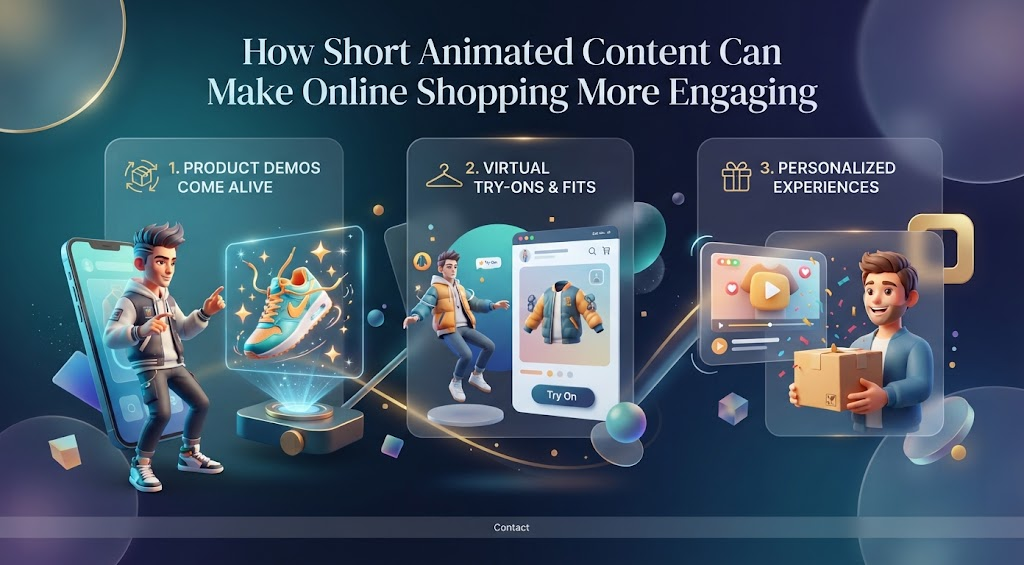
How Short Animated Content Can Make Online Shopping More Engaging
Online shopping has become incredibly visual. Before customers read a product description, compare specifications, or think about adding something to their cart, they usually notice the images and overall presentation first. A product can be excellent, but if its value is difficult to understand from the page, shoppers may simply move on.
This is one reason short-form visual content has become so useful for ecommerce brands. A video to GIF converter can turn a small section of a product demonstration into a lightweight, looping visual that shows how something works. Instead of relying entirely on static photography, retailers can use movement to demonstrate features, highlight details, or give shoppers a better sense of the product before they make a purchase.
Why Static Product Photos Are Not Always Enough
Product photography is essential, but a single image can only tell part of the story.
Consider something as simple as a piece of clothing. A photograph can show the color, pattern, and overall shape, but it cannot easily show how the material moves. Similarly, a kitchen appliance may look impressive in a photograph, yet customers might still wonder how it operates.
Short animations can fill that gap.
A few seconds of movement can show a product from several angles, demonstrate a feature, or illustrate how it should be used. The customer doesn’t have to imagine the experience. They can see it.
This is particularly valuable for products where movement or functionality is part of the buying decision.
Turn Product Demonstrations Into Useful Visuals
One of the simplest ways to introduce animation into an ecommerce strategy is to reuse video content that already exists.
Suppose a retailer has recorded a 30-second demonstration of a product. The entire video may be too long to place next to every product description. Instead, a useful five- or ten-second section can be turned into a looping visual.
For example, a retailer selling home organization products could demonstrate:
- A drawer organizer being installed
- A storage container opening and closing
- A foldable product being assembled
- A kitchen tool being used
- A lighting product switching between settings
These small demonstrations answer practical questions without forcing shoppers to watch a full video.
Animation Can Make Product Pages Feel More Interactive
A good ecommerce page should feel informative without becoming overwhelming.
Too much text can make a product page feel heavy. Too many photographs can create repetition. Short animated elements offer another way to communicate information while keeping the page visually interesting.
Imagine a customer looking at a new desk lamp. One image shows its design, another shows the packaging, and a short animation demonstrates how the lamp adjusts.
That final visual provides information that photographs alone cannot easily communicate.
The important point is that animation should have a purpose. Movement shouldn’t be added simply because it looks impressive. It should help answer a question the customer might have.
Show Details That Customers Usually Miss
Small product details often influence purchasing decisions.
A close-up photograph might show the texture of a fabric, but a short moving clip can reveal how that fabric behaves when folded or worn. A beauty product might benefit from a demonstration of its texture or application. A piece of furniture could be shown with a drawer opening or a mechanism operating.
These details help customers understand what they’re actually buying.
For online retailers, this matters because shoppers cannot physically pick up or test a product before purchasing it. The more effectively a website recreates that experience through visuals, the more informed the customer can feel.
Use Animation for More Than Product Pages
The value of short animated content doesn’t stop at ecommerce product listings.
Online retailers can also use it across their broader marketing strategy.
Social Media
Short looping visuals are useful for introducing products, highlighting seasonal collections, or demonstrating features. They can be particularly effective when users are scrolling quickly through a social feed.
Email Marketing
An animated product preview can make an otherwise text-heavy promotional email more engaging. A short visual can show a new product without requiring subscribers to leave their inbox immediately.
Blog Content
Product-related blog posts often contain explanations, comparisons, and buying advice. Adding a small demonstration can make the article easier to understand and more useful.
Promotional Banners
A subtle animated element can draw attention to a seasonal campaign, new collection, or limited-time promotion without relying on large amounts of text.
Keep the Customer Experience in Mind
There is a temptation to add movement everywhere once animation becomes part of a content strategy. That’s usually where things can go wrong.
More animation doesn’t automatically mean better engagement.
A professional ecommerce experience should remain easy to navigate. Visuals should load efficiently, work properly on mobile devices, and complement the surrounding content rather than competing with it.
A few practical rules can help:
Keep the message focused. One visual should communicate one main idea.
Avoid unnecessary effects. Simple movement often looks more professional than excessive transitions.
Think mobile-first. Make sure the visual remains clear on a smaller screen.
Use descriptive surrounding text. A short explanation can provide context for the visual.
Prioritize useful information. If the animation doesn’t help the customer understand the product, it may not need to be there.
A Simple Example From an Everyday Shopping Experience
Imagine you’re shopping online for a travel bag.
You can see several photographs showing the exterior, interior, and available colors. The description tells you the bag has multiple compartments.
But you’re still wondering how those compartments are arranged.
A short animation opens the bag, moves through the main compartments, and shows where a laptop, shoes, and smaller accessories can fit.
That tiny demonstration may answer the question immediately.
No additional paragraph is necessary. No customer support message is required. The visual has done the explaining.
This is where thoughtful animation becomes genuinely useful rather than decorative.
Combine Movement With Strong Product Copy
Animation should never replace good product descriptions.
Customers still need information about dimensions, materials, compatibility, care instructions, pricing, shipping, and other important details. Visual content works best when it supports this information.
A strong product page might therefore combine:
- High-quality product photography
- A short demonstration
- Clear product benefits
- Specific technical information
- Customer reviews
- Frequently asked questions
Each element serves a different purpose.
Images attract attention. Animation demonstrates. Copy explains. Reviews provide customer perspective.
Together, they create a more complete shopping experience.
Think Like the Customer
Before creating an animated visual, ask a simple question:
What might a customer still not understand after looking at the product photos?
That question can guide the entire creative process.
If the answer is “how it works,” demonstrate the functionality.
If it’s “how big it is,” show it beside a familiar object.
If it’s “how it looks when used,” create a short real-world demonstration.
If it’s “how the product changes,” show the transformation.
The strongest ecommerce visuals don’t simply make a page prettier. They remove uncertainty.
Conclusion
Online shoppers want more than attractive product photos. They want enough information to feel confident about what they’re buying.
Short, purposeful animations can help bridge the gap between seeing a product and understanding it. When used thoughtfully, they can demonstrate functionality, highlight details, support marketing campaigns, and make product pages more engaging without overwhelming visitors.
For ecommerce brands, the goal isn’t to add motion everywhere. It’s to use the right visual at the right moment to answer the customer’s next question. That simple approach can turn a static shopping experience into one that feels clearer, more informative, and much closer to seeing a product in person.